


Altre immagini
Altre immagini
Raumbeispiel
256
Gotthard Graubner
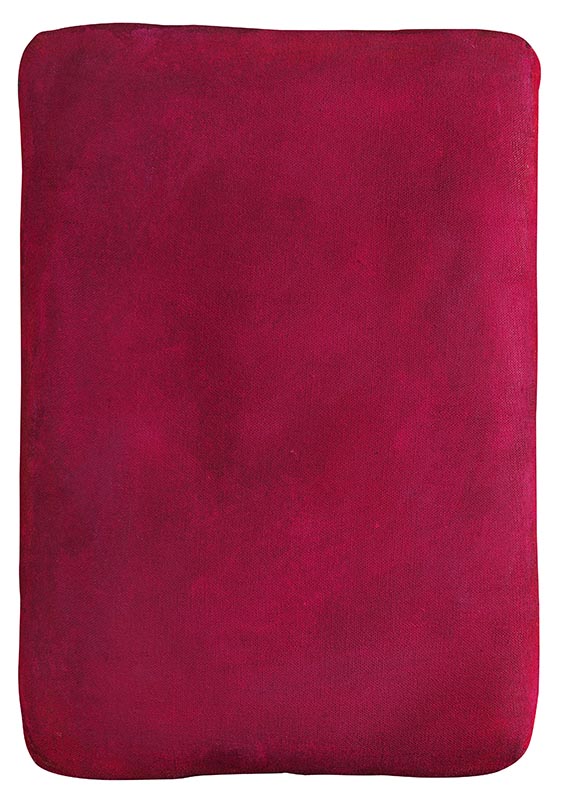
Ohne Titel (rot), 1987.
Mixed media on canvas over synthetic wadding on...
Stima: € 70,000 / $ 78,400
256
Gotthard Graubner
Ohne Titel (rot), 1987.
Mixed media on canvas over synthetic wadding on...
Stima: € 70,000 / $ 78,400
Gotthard Graubner
1930 - 2013
Ohne Titel (rot). 1987.
Mixed media on canvas over synthetic wadding on canvas.
Signed, dated, and with a direction arrow on the reverse. 57 x 39 x 12 cm (22.4 x 15.3 x 4.7 in).
• Innovative aesthetics: Graubner’s “Color Space Bodies” extend Rothko’s sensual color experiences into the third dimension.
• “Color Space Bodies” are included in the collections of the Neue Nationalgalerie in Berlin, the Louisiana Museum in Humlebæk, and the Harvard Art Museum in Cambridge, among others.
• “Color Space Bodies” were exhibited at, among others, documenta 6 (1977) and the Venice Biennale (1982).
PROVENANCE: Galerie Sander, Darmstadt.
Private collection, Baden-Württemberg (acquired from the above, 2019, Ketterer Kunst).
Private collection, Southern Germany (from the above).
LITERATURE: Ketterer Kunst, Munich, Auction 489, Evening Sale, June 7, 2019, lot 102 (with color illustration).
“Color unfolds as a color organism; I observe its independent life, I respect its inherent laws. Thus, the two-dimensional expansion could concentrate into a body, and the body could dissolve into space as a mist through incorporeal condensation. The misty space, as perhaps the most total expression of my painting, appeals to all the senses [.].”
Gotthard Graubner, quoted in: Kritisches Lexikon der Gegenwartskunst, Issue 16, Munich 1991, p. 15.
Called up: December 5, 2026 - ca. 16.28 h +/- 20 min.
One year after the creation of this work, Gotthard Graubner created the two enormous murals “Begegnungen” (Encounters) for the official residence of the Federal President at Bellevue Palace in Berlin; executed in violet and yellow, they still adorn the two end walls of the Great Hall today and project their powerful chromatic harmony into the space. While Graubner initially stretched his early cushion paintings over fine nylon fabrics, for his later, larger-format “color space bodies”—as well as in this luminous work—he increasingly used sturdy canvas, which he backed with upholstery wadding. The application of paint—which creates a cloudy depth of color—is usually done with a wide variety of broom-like brushes on the canvas lying on the floor. To enhance the complexity and depth of individual color tones—in our outstanding work, a luminous, deep magenta—into a “color-space body” with an oscillating effect and unique aesthetic presence, numerous drying processes are required, along with a special compositional sensitivity that decisively characterizes Graubner’s painterly practice. First in watercolors, then on canvas, Graubner experiments with methods of applying paint that give densely layered paint priority over the confining form of the picture’s edges. To enhance the spatial effect of the color fields, Graubner began in the early 1960s to stretch Perlon fabric over fabric pads the size of the painting. By first soaking and painting the fabric cushions with several layers of diluted acrylic paint, Graubner creates a fluctuating, breathing density akin to a color space reaching out toward the viewer. In 1970, Graubner replaced the earlier titles “Farbleib” and “Kissenbild” with the term “Farbraumkörper.” In these impressive painterly creations—which were first exhibited by the prominent Düsseldorf gallerist Alfred Schmela and ultimately earned Graubner a teaching position in 1965 and, beginning in 1969, a professorship at the University of Fine Arts in Hamburg— Graubner ultimately succeeded in liberating the effect of color from the picture support by extending it into the third dimension, thereby allowing the application of paint to extend into space. This is exemplified by the present work, which allows the viewer to experience Graubner’s use of color as the absolutely most important means of expression in a unique way. The exceptionally coarse texture of the canvas enhances the color's striking effect. The color does not appear flat but sculptural; it unfolds to reveal a hidden, subtly suggested three-dimensional form. Due to the innovative aesthetics of this three-dimensional painting—with which Graubner was also represented for the first time at Documenta in Kassel in 1968—Graubner’s “Color Space Bodies” are considered the central body of work in the artist’s oeuvre. [JS]

Commissione, tassa e diritti di seguito
Quest'oggetto viene offerto con regime fiscale normale o con imposizione sul margine di profitto.
Calcolo commissione particolare sul margine del profitto:
- Prezzo d’aggiudicazione fino a 2.000.000 euro: provvigione del 34%.
- Per la parte del prezzo d’aggiudicazione superiore a 2.000.000 euro si calcola una provvigione del 29%, che viene aggiunta a quella relativa alla parte del prezzo d’aggiudicazione fino a 2.000.000 euro.
- Per la parte del prezzo d’aggiudicazione superiore a 4.000.000 euro si calcola una provvigione del 22%, che viene aggiunta a quella relativa alla parte del prezzo d’aggiudicazione fino a 4.000.000 euro.
La provvigione comprende l'IVA, ma questa non viene indicata.
Calcolo regime fiscale normale:
Prezzo di aggiudicazione fino a 2.000.000 €: supplemento del 29%.
Prezzo di aggiudicazione superiore a 2.000.000 €: Parte del prezzo fino a 2.000.000 € supplemento del 29 %, parte del prezzo che supera i 2.000.000 € supplemento del 23%.
Prezzo di aggiudicazione superiore a 4.000.000 €: Parte del prezzo che supera i 4.000.000 € supplemento del 15%.
L'IVA prevista dalla legge è pari al 7 % sulla somma del prezzo di aggiudicazione e del supplemento.
La preghiamo di avvisarci prima della fatturazione nel caso in cui desidera applicare il regime fiscale normale.
Calcolo diritti di seguito:
Per le opere originali di arti figurative e fotografie di artisti viventi o deceduti da meno di 70 anni soggette al diritto di seguito, in tutti i casi suddetti viene riscossa in aggiunta, a liquidazione della compensazione del diritto di seguito dovuto dalla casa d'aste ai sensi del § 26 della legge tedesca sul diritto d'autore (Urheberrechtsgesetz, UrhG), una compensazione del diritto di seguito con le percentuali indicate nel § 26 2° comma UrhG, che attualmente sono le seguenti:
4 per cento della parte del ricavo della vendita da 400,00 euro a 50.000 euro,
un altro 3 per cento della parte del ricavo della vendita da 50.000,01 a 200.000 Euro,
un altro 1 per cento della parte del ricavo della vendita da 200.000,01 a 350.000 Euro,
un altro 0,5 per cento della parte del ricavo della vendita da 350.000,01 a 500.000 euro e
un altro 0,25 per cento della parte del ricavo della vendita superiore a 500.000 euro.
L’importo complessivo della compensazione del diritto di seguito derivante da una rivendita è pari al massimo a 12.500 euro.