


Altre immagini
31
Günther Förg
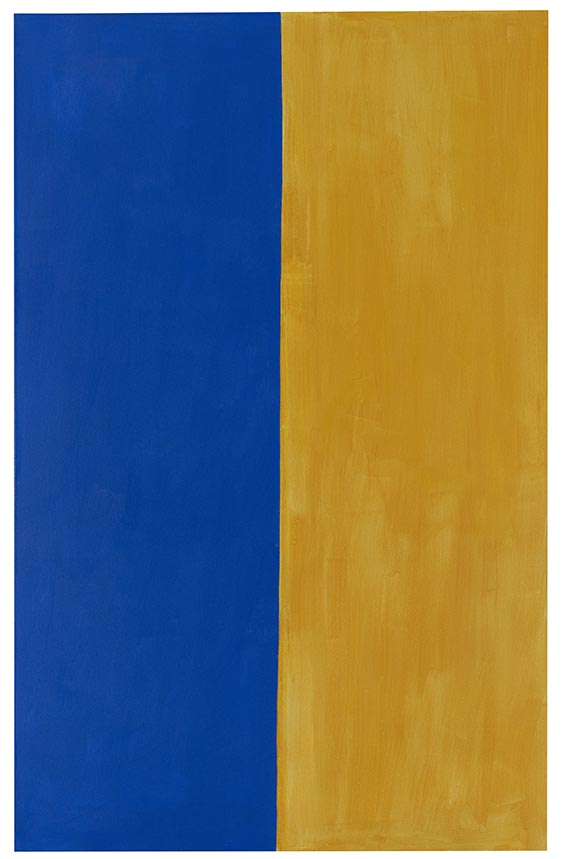
Rivoli, 1989.
Acrilico su tela
Prezzo di vendita dopo asta: € 145,000 / $ 165,300
31
Günther Förg
Rivoli, 1989.
Acrilico su tela
Prezzo di vendita dopo asta: € 145,000 / $ 165,300
Günther Förg
1952 - 2013
Rivoli. 1989.
Acrylic on canvas.
Signed, dated and titled on the reverse of the canvas. 220 x 140 cm (86.6 x 55.1 in). [AW].
• A monumental example of Förg's dynamic canvases.
• Intense color meets geometric precision.
• Only three works from this series have been auctioned to date (artprice.com).
• Created for the 1989 exhibition at Castello di Rivoli Museo d'Arte Contemporanea in Rivoli-Turin.
• Works by Günther Förg are currently on display at the Fondation Beyeler in Riehen and in a solo exhibition at the Neues Museum in Nuremberg.
The work is registered in the Günther Förg Archive under the number WVF.89.B.0229. We are grateful to Mr. Michael Neff of the Günther Förg Estate for kindly confirming the authenticity of this work.
PROVENANCE: Greene Naftali Gallery, New York (with the gallery label on the reverse of the stretcher).
Private collection, United Kingdom (acquired from the above in 2014).
EXHIBITION: Domenico Bianchi. Alan Charlton. Günther Förg. Barbara Kruger. Toon Verhoef, Castello di Rivoli Museo d'Arte Contemporanea, Rivoli-Turin, October 6 - December 3, 1989.
LITERATURE: Bruno Corà, Günther Förg: multiple forms in the transformation of space, in: R. Fuchs, J. Gachnang, C. Mundici, Domenico Bianchi. Alan Charlton. Günther Förg. Barbara Kruger. Toon Verhoef, Rivoli-Turin 1989, no p.
1952 - 2013
Rivoli. 1989.
Acrylic on canvas.
Signed, dated and titled on the reverse of the canvas. 220 x 140 cm (86.6 x 55.1 in). [AW].
• A monumental example of Förg's dynamic canvases.
• Intense color meets geometric precision.
• Only three works from this series have been auctioned to date (artprice.com).
• Created for the 1989 exhibition at Castello di Rivoli Museo d'Arte Contemporanea in Rivoli-Turin.
• Works by Günther Förg are currently on display at the Fondation Beyeler in Riehen and in a solo exhibition at the Neues Museum in Nuremberg.
The work is registered in the Günther Förg Archive under the number WVF.89.B.0229. We are grateful to Mr. Michael Neff of the Günther Förg Estate for kindly confirming the authenticity of this work.
PROVENANCE: Greene Naftali Gallery, New York (with the gallery label on the reverse of the stretcher).
Private collection, United Kingdom (acquired from the above in 2014).
EXHIBITION: Domenico Bianchi. Alan Charlton. Günther Förg. Barbara Kruger. Toon Verhoef, Castello di Rivoli Museo d'Arte Contemporanea, Rivoli-Turin, October 6 - December 3, 1989.
LITERATURE: Bruno Corà, Günther Förg: multiple forms in the transformation of space, in: R. Fuchs, J. Gachnang, C. Mundici, Domenico Bianchi. Alan Charlton. Günther Förg. Barbara Kruger. Toon Verhoef, Rivoli-Turin 1989, no p.
Thanks to his unwavering curiosity and daring experiments, Günther Förg’s multifaceted art resists pigeonholing. Born in Füssen in 1952, the artist’s work includes not only painting but also photography, sculpture, drawing, and public art. During his studies at the Munich Academy of Fine Arts, Förg initially devoted himself to painting before moving on to photography in the early 1980s. A step that opened his perspectives and proved extremely fruitful for his future artistic practice.
He showed a particular interest in the modernist architecture of Italian Rationalism. The staircases, edges, and functional forms of this architectural style had a lasting influence on his visual language. Architectural elements are reduced to abstract lines and planes. Before Förg eventually returned to painting on canvas, he also experimented with painted lead plates, known as “Lead Paintings.” Works of this kind allowed him to explore surface and materiality in depth. In 1988, however, he made a conscious decision to return to painting with acrylic on canvas. “Rivoli” is among the first works from this new phase.
In his return to painting, he combined previous experience gained from photography, geometric forms, and his exploration of tactility and texture to create an impressive synthesis. Unlike in Hard-Edge Painting, the use of a broad brush creates lively textures that enliven the monochromatic color fields and lend them a vibrant, dynamic quality. In this sense, our work from 1989 marks a pivotal moment within this development.
The approximately 25 paintings of the “Rivoli” series were created in connection with an exhibition of the same name at Castello di Rivoli near Turin. Our monumental work presents a particularly compelling example that encapsulates the mysterious and ambiguous qualities of Förg’s painting and his unwavering focus on color and composition. On the one hand, Förg embraced the classical form of the panel painting; on the other, he engaged with the works of Barnett Newman. He divided the large-format canvas into two vertical tension fields, contrasting a bold ultramarine blue on the left with a softer, yet equally intense, dark cadmium yellow on the right. Despite the reduced palette, the work radiates a palpable energy through Förg’s vigorous, succinct brushstrokes. The composition is reminiscent of a window or a door: it suggests forms without committing to a concrete reality. Günther Förg, who died in Freiburg im Breisgau in 2013, is known for his extraordinary zest for experimentation and constant evolution—qualities that lend his work an enduring vitality. [AW]
He showed a particular interest in the modernist architecture of Italian Rationalism. The staircases, edges, and functional forms of this architectural style had a lasting influence on his visual language. Architectural elements are reduced to abstract lines and planes. Before Förg eventually returned to painting on canvas, he also experimented with painted lead plates, known as “Lead Paintings.” Works of this kind allowed him to explore surface and materiality in depth. In 1988, however, he made a conscious decision to return to painting with acrylic on canvas. “Rivoli” is among the first works from this new phase.
In his return to painting, he combined previous experience gained from photography, geometric forms, and his exploration of tactility and texture to create an impressive synthesis. Unlike in Hard-Edge Painting, the use of a broad brush creates lively textures that enliven the monochromatic color fields and lend them a vibrant, dynamic quality. In this sense, our work from 1989 marks a pivotal moment within this development.
The approximately 25 paintings of the “Rivoli” series were created in connection with an exhibition of the same name at Castello di Rivoli near Turin. Our monumental work presents a particularly compelling example that encapsulates the mysterious and ambiguous qualities of Förg’s painting and his unwavering focus on color and composition. On the one hand, Förg embraced the classical form of the panel painting; on the other, he engaged with the works of Barnett Newman. He divided the large-format canvas into two vertical tension fields, contrasting a bold ultramarine blue on the left with a softer, yet equally intense, dark cadmium yellow on the right. Despite the reduced palette, the work radiates a palpable energy through Förg’s vigorous, succinct brushstrokes. The composition is reminiscent of a window or a door: it suggests forms without committing to a concrete reality. Günther Förg, who died in Freiburg im Breisgau in 2013, is known for his extraordinary zest for experimentation and constant evolution—qualities that lend his work an enduring vitality. [AW]
Commissione, tassa e diritti di seguito
Quest'oggetto viene offerto con regime fiscale normale.
Calcolo regime fiscale normale:
Prezzo di aggiudicazione fino a 2.000.000 €: supplemento del 29%. Prezzo di aggiudicazione superiore a 2.000.000 €: Parte del prezzo fino a 2.000.000 € supplemento del 29 %, parte del prezzo che supera i 2.000.000 € supplemento del 23%.
Prezzo di aggiudicazione superiore a 4.000.000 €: Parte del prezzo che supera i 4.000.000 € supplemento del 15%.
L'IVA prevista dalla legge è pari al 7 % sulla somma del prezzo di aggiudicazione e del supplemento.
Calcolo diritti di seguito:
Per le opere originali di arti figurative e fotografie di artisti viventi o deceduti da meno di 70 anni soggette al diritto di seguito, in tutti i casi suddetti viene riscossa in aggiunta, a liquidazione della compensazione del diritto di seguito dovuto dalla casa d'aste ai sensi del § 26 della legge tedesca sul diritto d'autore (Urheberrechtsgesetz, UrhG), una compensazione del diritto di seguito con le percentuali indicate nel § 26 2° comma UrhG, che attualmente sono le seguenti:
4 per cento della parte del ricavo della vendita da 400,00 euro a 50.000 euro,
un altro 3 per cento della parte del ricavo della vendita da 50.000,01 a 200.000 Euro,
un altro 1 per cento della parte del ricavo della vendita da 200.000,01 a 350.000 Euro,
un altro 0,5 per cento della parte del ricavo della vendita da 350.000,01 a 500.000 euro e
un altro 0,25 per cento della parte del ricavo della vendita superiore a 500.000 euro.
L’importo complessivo della compensazione del diritto di seguito derivante da una rivendita è pari al massimo a 12.500 euro.
Calcolo regime fiscale normale:
Prezzo di aggiudicazione fino a 2.000.000 €: supplemento del 29%. Prezzo di aggiudicazione superiore a 2.000.000 €: Parte del prezzo fino a 2.000.000 € supplemento del 29 %, parte del prezzo che supera i 2.000.000 € supplemento del 23%.
Prezzo di aggiudicazione superiore a 4.000.000 €: Parte del prezzo che supera i 4.000.000 € supplemento del 15%.
L'IVA prevista dalla legge è pari al 7 % sulla somma del prezzo di aggiudicazione e del supplemento.
Calcolo diritti di seguito:
Per le opere originali di arti figurative e fotografie di artisti viventi o deceduti da meno di 70 anni soggette al diritto di seguito, in tutti i casi suddetti viene riscossa in aggiunta, a liquidazione della compensazione del diritto di seguito dovuto dalla casa d'aste ai sensi del § 26 della legge tedesca sul diritto d'autore (Urheberrechtsgesetz, UrhG), una compensazione del diritto di seguito con le percentuali indicate nel § 26 2° comma UrhG, che attualmente sono le seguenti:
4 per cento della parte del ricavo della vendita da 400,00 euro a 50.000 euro,
un altro 3 per cento della parte del ricavo della vendita da 50.000,01 a 200.000 Euro,
un altro 1 per cento della parte del ricavo della vendita da 200.000,01 a 350.000 Euro,
un altro 0,5 per cento della parte del ricavo della vendita da 350.000,01 a 500.000 euro e
un altro 0,25 per cento della parte del ricavo della vendita superiore a 500.000 euro.
L’importo complessivo della compensazione del diritto di seguito derivante da una rivendita è pari al massimo a 12.500 euro.